
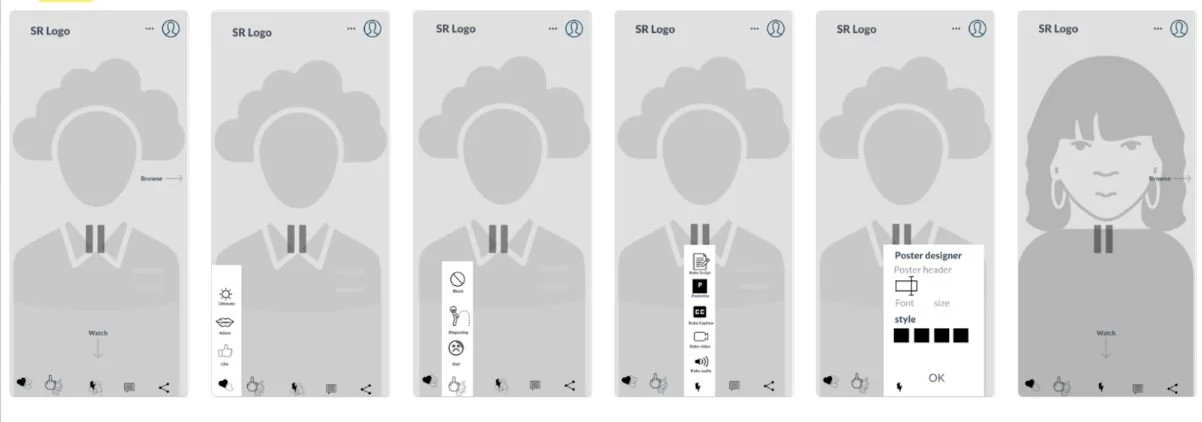
prototype for testing
Why do I constantly use a Black & White theme?
I have been advocating a black & white theme since five years or more.
Why do I fall for this theme so consistently? When it goes for momentum, whether it is social or demographic changes, we go off on a tangent. I have had an history of talking irrelevant things. What truly gets my attention is when other people get away with such behavior. Especially people in positions.
When it comes to sustainability, we( the believers) are busy advocating
the effects of human action on environment. Their advocacy is simple, that to bring about positive change on our planet, we should first believe that there is a looming environmental emergency. Without this belief there seems to be no workaround. Whether this Climate god exists or not, we have to come together & believe it. That is fair enough.
What seems to me unfair is the manner in which we figure out our enemies.
For instance, it is customary to assume that Climate Change Villains (According to a CNN report) are Burning fossil fuel, transportation, manufacturing, Farm raised food animals, burning other types of fuels, cement & aluminum production, deforestation, energy production, landfills & shipping related emission.
While we are busy fighting the usual villains, there are others we are pretty oblivious about. Ignore the rare impact of extracting rare earth minerals form heavily exploited sources. Look at another perspective.
Deloitte Global predicts that smartphones—the world’s most popular consumer electronics device, expected to have an installed base of 4.5 billion in 2022—will generate 146 million tons of CO2 or equivalent emissions (CO2e) in 2022. This is less than half a percent of the 34 gigatons of total CO2 emitted globally in 2021, but it is still worth trying to reduce.
The bulk of these emissions, 83% of the total, will come from the manufacture, shipping, and first-year usage of the 1.4 billion new smartphones forecast to be shipped in 2022. Usage-related emissions from the other 3.1 billion smartphones in use during 2022 will generate an additional 11%, and the remainder will come from refurbishing existing smartphones (4%) and end-of-life processes (1%),5 including recycling.
That was just about the mercenary impact of smartphone. Lets leave that aside for now. What about colour?
User Experience Designers are not only responsible to the users & stakeholders, but also environment.
Colour is an environmental hazard.
At a very grassroot level, its common to see that black & white assets occupy less data space than its colour counterpart.
Bangladesh is the world's second biggest garment manufacturing hub after China, exporting $34 billion worth of garments in 2019. And clothes made, dyed and finished in the country often end up in main street shops across the United States and Europe.
But as consumers browse through the season's latest color trends, few will spare much thought to the dyes used to create everything from soft pastels to fluorescent hues -- or their toxic history.
Fashion is responsible for up to one-fifth of industrial water pollution, thanks in part to weak regulation and enforcement in producer countries like Bangladesh, where wastewater is commonly dumped directly into rivers and streams. The discharge is often a cocktail of carcinogenic chemicals, dyes, salts and heavy metals that not only hurt the environment, but pollute essential drinking water sources.
CNN report
It is customary to come across millions of customers that ask for colour.
Do they really understand the consequences of the impact that colour
creats on the environment?
Are there a lot of people that are ready to ostracize their use of colour for simpler transmissions? I think thats a tough call. We are happy fighting climate change by going after the big oil companies. That is far convenient.
As User experience designers, it is important to take this into consideration and build experiences that lower the burden on environment.